



The Evolution of West Coast Hip-Hop Music Releases
The beat drops, the bassline thumps, and a story unfolds. This is the essence of West Coast Hip Hop, a genre that has profoundly shaped global music and culture. From its early days in analog recording studios, this sound has evolved, leaving an undeniable mark. It boasts a unique blend of artistic innovation and cultural impact that reaches far beyond its regional roots.
We will take a deep dive into West Coast hip hop rappers. We will trace the genre’s fascinating timeline, exploring its subgenres and regional movements. Join us as we uncover the legendary artists and defining characteristics that make West Coast hip hop a powerhouse. We will look at its journey from pioneering sounds to its current influence in today’s hip-hop landscape.

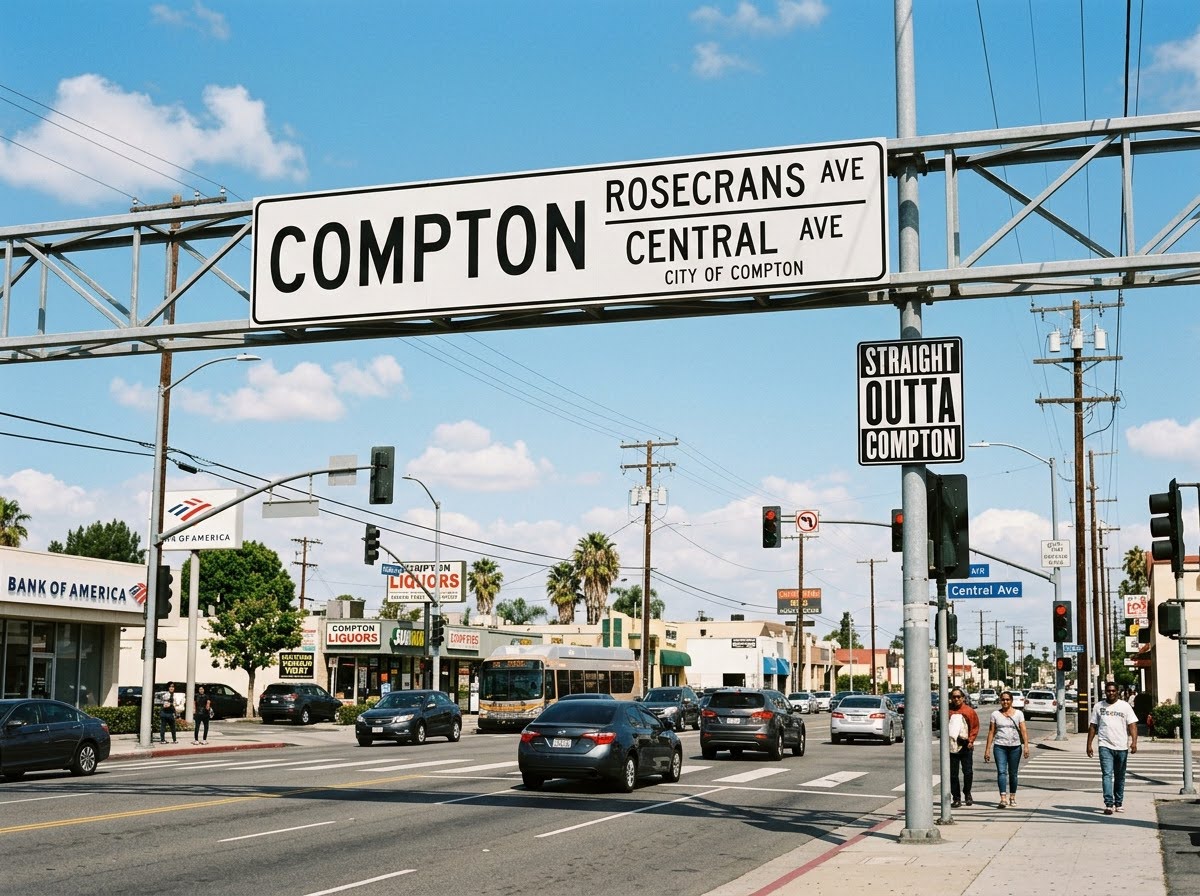
The narrative of West Coast hip-hop is a rich tapestry woven from diverse threads, beginning in the vibrant, often turbulent, urban landscapes of California in the 1980s. This era laid the groundwork for a sound that would soon captivate the world, offering a raw, unfiltered perspective on life in the inner cities. Pioneers like Ice-T emerged as crucial figures, widely recognized for their role in defining the nascent genre of gangsta rap. Ice-T’s early work, characterized by its unflinching lyrical realism and vivid storytelling, provided a stark contrast to the prevailing East Coast sounds, establishing a unique identity for the West.
The late 1980s witnessed the explosive arrival of N.W.A, a group whose impact on West Coast hip-hop is immeasurable. Their seminal album, Straight Outta Compton, became a cultural phenomenon, not just for its groundbreaking sound but for its powerful social commentary. The group, spearheaded by figures like Eazy-E, Dr. Dre, Ice Cube, MC Ren, and DJ Yella, articulated the frustrations and realities of urban youth, turning their experiences into a potent form of musical protest. Eazy-E, despite sometimes being noted for his vocal delivery over technical lyrical prowess, possessed an undeniable charisma and influence that cemented his place as a foundational figure. His vision, coupled with the group’s collective talent, propelled Ruthless Records into the national spotlight, showcasing a lyrical realism that resonated deeply with audiences and challenged societal norms. It was a period of intense creativity, where artists like Ice Cube, even after leaving N.W.A, continued to deliver a string of classics. For instance, Ice Cube dropped four straight West Coast masterpieces from 1990-1993, including AmeriKKKa’s Most Wanted and Death Certificate, which are frequently cited among the top West Coast hip-hop albums ever. This early period was crucial in establishing the West Coast’s distinctive voice and setting the stage for its future dominance.
From Gangsta Rap to the G-Funk Era
As the 1990s dawned, West Coast hip-hop underwent a significant transformation, evolving from the raw aggression of early gangsta rap into the smoother, more melodic sound of G-funk. This pivotal shift was largely orchestrated by Dr. Dre, whose visionary production on his 1992 solo debut, The Chronic, redefined the genre. This album is not only regarded by many as the best West Coast hip-hop album of all time but also pioneered the G-funk sound, influencing mainstream audiences with its distinctive blend of laid-back grooves, prominent synthesizers, and deep, resonant basslines. Dr. Dre’s genius lay in his ability to fuse classic funk samples with contemporary hip-hop rhythms, creating an immersive and often cinematic sonic experience.
Following in Dre’s footsteps, Snoop Dogg’s 1993 debut, Doggystyle, became another cornerstone of the G-funk era. Selling at an incredible pace, Doggystyle is widely considered the quintessential G-funk album alongside The Chronic, solidifying the subgenre’s commercial and artistic viability. Snoop’s distinctive, languid flow perfectly complemented the album’s melodic basslines and infectious funk samples, painting vivid pictures of West Coast life. Other artists like Warren G, with his massive hit “Regulate,” and groups such as Above the Law further contributed to the G-funk aesthetic, expanding its reach and demonstrating its versatility. While Dr. Dre’s prowess as a rapper was occasionally supported by ghostwriters, his unparalleled skill as a producer and his ability to craft compelling sonic landscapes were undeniable, making him a true architect of this influential sound.
The Impact of Death Row Records on Hip-Hop Music Releases
The rise of Death Row Records in the early to mid-1990s marked an unparalleled era of industry dominance for West Coast hip-hop. Founded by Dr. Dre and Suge Knight, the label became a powerhouse, releasing a string of multi-platinum albums that redefined commercial success in hip-hop. The signing of 2Pac, an artist who, despite his East Coast origins, cemented his legacy on the West Coast, propelled Death Row to stratospheric heights. 2Pac’s prolific output was legendary; he released five solo albums and one album with Thug Life in just five short years (1991-1996), including three of West Coast hip-hop’s most influential albums in a mere 20-month span from March 1995 to November 1996. His magnum opus, All Eyez on Me, released in 1996, became a double diamond-certified album, showcasing his unparalleled storytelling, raw emotion, and profound impact on the culture.
Beyond its superstar acts, Death Row Records also cultivated significant talent like Tha Dogg Pound, a duo composed of Daz Dillinger and Kurupt. Daz Dillinger, in particular, is credited with pioneering West Coast hip-hop and gangsta rap for mainstream audiences, contributing significantly to the label’s signature sound. His debut solo album, Retaliation, Revenge and Get Back (1998), peaked impressively in the top 10 of the Billboard 200, a testament to his influence. Daz’s production work was also crucial, having learned extensively from Dr. Dre and reportedly contributing uncredited work to much of Snoop Dogg’s Doggystyle. After the departures of major artists following 2Pac’s tragic death and Suge Knight’s imprisonment, Daz Dillinger remarkably remained the last platinum-selling artist at Death Row, showcasing his enduring talent and loyalty. Death Row Records, though controversial, undeniably shaped the trajectory of West Coast hip-hop, leaving an indelible mark on its sound, style, and commercial ambition.
Regional Identities: Compton, Oakland, and Beyond

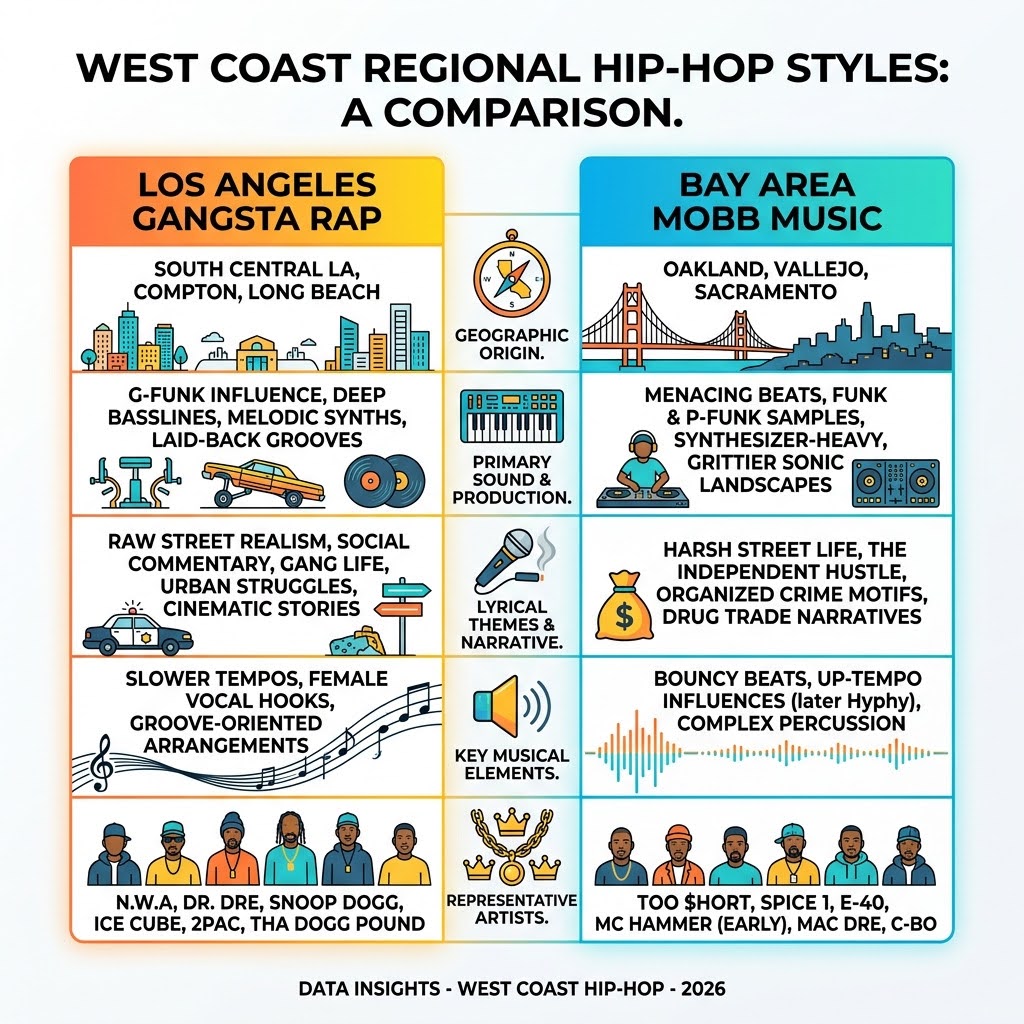
The West Coast hip-hop landscape is far from monolithic; it is a vibrant mosaic of distinct regional identities, each contributing its unique flavor to the overarching genre. While Compton and Long Beach became synonymous with the rise of gangsta rap and G-funk, other cities like Oakland, Vallejo, and Sacramento forged their own sounds and narratives. South Central Los Angeles, the birthplace of N.W.A, laid the foundation for the confrontational and socially conscious style that would define much of the early West Coast sound. Long Beach, home to Snoop Dogg and Warren G, infused a smoother, funk-driven aesthetic into the mix.
Further north, cities like Sacramento cultivated a grittier, often darker style of gangsta rap. Artists such as C-Bo became prominent figures, known for their uncompromising lyrics that detailed the harsh realities of street life. C-Bo, who famously faced legal troubles for his lyrical content, embodied the raw, unvarnished storytelling prevalent in his region. Similarly, in the Bay Area, Spice 1 emerged as a key figure in developing what became known as “mobb music.” His early albums, including Spice 1 (1992), 187 He Wrote (1993), and AmeriKKKa’s Nightmare (1994), are widely regarded as West Coast classics, defining a sound characterized by its menacing beats and stark narratives. This regional diversity fostered a strong sense of pride and competition, with each city contributing to the rich tapestry of West Coast hip-hop.
The Bay Area’s Independent Spirit and Hyphy Movement
The Bay Area, encompassing cities like Oakland and Vallejo, carved out a distinct niche within West Coast hip-hop, characterized by an independent spirit and innovative sound. This region became a hotbed for entrepreneurial hustle, with artists often pioneering their own labels and distribution methods long before it became common practice. Too $hort, a legendary figure from Oakland, exemplifies this DIY ethos. Having released his first record, “Players,” nearly 30 years before his 2014 material, he stands as one of the longest-tenured rappers in hip-hop history, consistently pushing boundaries and maintaining an independent streak.
Another pivotal figure, E-40 from Vallejo, is celebrated not only for his distinctive slang and rapid-fire delivery but also for founding Sick Wid It Records in 1989. This label became a crucial platform for Bay Area talent, nurturing artists and solidifying the region’s unique sound. E-40’s influence extended significantly with the popularization of the “hyphy movement” in the early 2000s. This energetic subgenre, characterized by its uptempo beats, distinctive dances, and a general ethos of wild, uninhibited fun, was propelled into the national spotlight by artists like Keak da Sneak, who is credited with coining the term “hyphy” in 1994. The movement also saw the rise of Mac Dre, whose charismatic presence and innovative style became synonymous with Bay Area culture. The Bay Area’s commitment to independent distribution and an entrepreneurial mindset allowed artists to maintain creative control and build a loyal fanbase, influencing a new generation of artists, including those featured in contemporary Yamano West Coast hip-hop releases, who continue to embody this spirit of innovation and self-reliance.
Lyrical Pioneers and Underground Legends
While mainstream attention often gravitated towards gangsta rap and G-funk, the West Coast also fostered a vibrant underground scene, home to lyrical pioneers and alternative sounds. These artists prioritized intricate wordplay, complex narratives, and experimental production, offering a different dimension to the West Coast’s musical identity. Ras Kass, known for his intellectual lyricism and sharp social commentary, emerged as a formidable voice, challenging listeners with his dense rhymes and profound insights.
Groups like The Pharcyde brought a playful, jazz-infused alternative to the harder-edged sounds, earning critical acclaim for their quirky humor and refreshing approach. Similarly, the Hieroglyphics crew, led by Del the Funky Homosapien, showcased an unparalleled level of lyrical density and technical skill. Del, along with fellow members like Casual and Souls of Mischief, pushed the boundaries of rhyme schemes and storytelling, influencing countless aspiring MCs. Aceyalone, a member of the Freestyle Fellowship, further exemplified this dedication to lyrical prowess, known for his fluid delivery and innovative flow. These artists, though perhaps not always achieving the same commercial success as their gangsta rap counterparts, left an indelible mark on West Coast hip-hop, proving its artistic breadth and depth beyond the more widely recognized subgenres. Their contributions ensured that the West Coast was not only a hub for groundbreaking beats but also a sanctuary for intricate, thought-provoking lyricism.
Defining the Sound: West Coast vs. East Coast Styles
The narrative of hip-hop’s golden age is often framed by the distinct rivalry and stylistic differences between the West Coast and East Coast. While both regions contributed immensely to the genre, their approaches to production, lyrical content, and overall aesthetic diverged significantly. The West Coast sound, deeply rooted in the funk traditions of the 1970s and 80s, is characterized by its laid-back grooves, prominent basslines, and often sun-drenched, melodic synthesizers. This production aesthetic, exemplified by G-funk, created a sonic landscape that was often cinematic and atmospheric, perfectly complementing narratives of cruising through Los Angeles streets or reflecting on life in the ‘hood.
In contrast, the East Coast, particularly New York, was known for its boom-bap sound: hard-hitting drums, intricate samples often drawn from jazz and soul, and a grittier, often more abstract lyrical focus. This stylistic divergence wasn’t just about music; it extended to lifestyle representation, fashion trends, and even cultural rivalry. While East Coast artists might have favored rugged workwear and a more intellectual, battle-rap oriented approach, West Coast rappers often embraced flashy jewelry, sportswear, and the iconic lowrider culture, symbolizing a different kind of urban swagger. This sonic and cultural distinction created a vibrant dialogue within hip-hop, pushing both regions to innovate and solidify their unique identities.
Essential Classic Albums and Cultural Milestones
The West Coast’s rich history is punctuated by a series of essential classic albums and cultural milestones that have left an enduring legacy. Beyond the G-funk era, artists continued to push boundaries and deliver impactful projects. Ice Cube, after his departure from N.W.A, embarked on a highly successful solo career, releasing politically charged and critically acclaimed albums. Death Certificate (1991) and The Predator (1992) are prime examples, showcasing Cube’s sharp social commentary, aggressive delivery, and unflinching critiques of racial injustice. These albums not only solidified his artistic legacy but also provided a voice for many disaffected communities.
2Pac’s discography is another treasure trove of West Coast classics. While his Death Row albums are iconic, earlier works like Me Against the World (1995) offered a more introspective and vulnerable side, demonstrating his incredible range as an artist. This album, released while he was incarcerated, resonated deeply with fans for its raw honesty and poignant reflections on life and death. Even before his solo career, 2Pac was part of the Oakland-based Digital Underground, where he honed his skills alongside Shock G, contributing to their unique, funk-infused sound. These albums and artists didn’t just sell millions; they became cultural touchstones, reflecting and shaping the experiences of a generation and cementing the West Coast’s place in hip-hop history.
Underrated Contributors to the West Coast Scene
While the spotlight often shines on the giants of West Coast hip-hop, numerous artists made significant, albeit sometimes less celebrated, contributions to the scene. These underrated talents often pushed artistic boundaries, provided crucial lyrical depth, or offered unique perspectives that enriched the genre. The D.O.C., for instance, was a lyrical powerhouse whose career was tragically cut short by a car accident that damaged his vocal cords shortly after releasing his critically acclaimed debut, No One Can Do It Better (1989). Despite this, his influence as a lyricist and songwriter for N.W.A and Dr. Dre is undeniable, showcasing a technical skill that was ahead of its time.
King T, a veteran from Compton, was another foundational figure whose smooth flow and charismatic delivery helped bridge the gap between early West Coast sounds and the emerging G-funk era. His consistent output and collaborations with Dr. Dre underscored his importance, even if he didn’t achieve the same superstardom. MC Eiht, as the frontman for Compton’s Most Wanted, delivered vivid, street-level narratives with an unmistakable voice, creating a distinct style that influenced countless gangsta rappers. Beyond the more commercial sounds, artists like Paris offered a fiercely political and militant voice, challenging the status quo with his uncompromising lyrics. Similarly, Boots Riley and his group The Coup, hailing from Oakland, blended funk, social activism, and sharp humor, crafting intelligent and thought-provoking music that stands as a testament to the West Coast’s diverse artistic landscape. These artists, in their unique ways, collectively represent the unsung heroes who helped build and diversify the rich tapestry of West Coast hip-hop.
The Modern Era and Future Hip-Hop Music Releases
The West Coast hip-hop scene continues to evolve, demonstrating remarkable resilience and adaptability in the modern era. While the foundational legends cast long shadows, a new generation of artists has emerged, carrying the torch and pushing the genre in exciting new directions. Kendrick Lamar, hailing from Compton, stands as a towering figure of contemporary hip-hop. His critically acclaimed albums, such as good kid, m.A.A.d city and To Pimp a Butterfly, have not only achieved massive commercial success but have also garnered widespread critical praise for their intricate storytelling, profound social commentary, and innovative musicality. Lamar’s artistry, often cited as maintaining hip-hop’s purity without pop crossovers, has earned him Pulitzer Prizes and cemented his status as one of the most important artists of his generation. His affiliation with Top Dawg Entertainment (TDE) has also highlighted the strength of collective talent within the West Coast.
Tragically, the untimely passing of Nipsey Hussle left a void, but his legacy of independent entrepreneurship and community empowerment continues to inspire. His Grammy-nominated album Victory Lap showcased his lyrical prowess and unwavering commitment to his Crenshaw community. Artists like Roddy Ricch have blended melodic trap sounds with West Coast sensibilities, achieving mainstream success with hits like “The Box.” The digital streaming era has profoundly impacted how music is consumed and distributed, allowing a broader array of West Coast artists to reach global audiences and experiment with new sounds, ensuring the region’s continued relevance and innovation.
Emerging Artists Shaping the New West
The vitality of West Coast hip-hop is evident in the dynamic roster of emerging artists who are actively shaping its future. These rappers are building on the legacy of their predecessors while injecting fresh perspectives and sounds into the genre. Mozzy, from Sacramento, has garnered significant acclaim for his gritty, authentic storytelling and prolific output, becoming a voice for the streets with his raw narratives. Blxst, a multi-talented artist from Los Angeles, has made waves with his smooth, melodic delivery and self-produced tracks, blurring the lines between R&B and hip-hop.
The next wave includes artists like 310babii, whose viral success with tracks like “soak city (do it)” showcases the power of social media in breaking new talent. Remble, known for his distinctive, deadpan flow and intricate wordplay, offers a unique take on gangsta rap from the perspective of Inglewood. G Perico, with his classic West Coast sound and G-funk influences, keeps the traditional sound alive while making it relevant to contemporary audiences. Kamaiyah, an Oakland native, brings a confident, assertive female voice to the scene, blending old-school vibes with modern flair. Groups like Shoreline Mafia, though now disbanded, left a significant mark with their energetic, party-ready anthems. These artists, among others, are proving that the West Coast continues to be a fertile ground for diverse talent, ensuring a vibrant future for hip-hop music releases from the region.
Innovation in Modern Hip-Hop Music Releases
Innovation remains a cornerstone of West Coast hip-hop, with artists constantly pushing creative boundaries and exploring new sonic territories. Tyler, The Creator, as a leading figure of the Odd Future collective, exemplifies this spirit of experimentation. His work consistently defies genre conventions, blending elements of alternative hip-hop, neo-soul, and even pop, all while maintaining a distinct, often quirky, artistic vision. His albums like IGOR and CALL ME IF YOU GET LOST have earned critical acclaim and commercial success, showcasing his evolution as both a rapper and a producer.
The modern era has also seen a rise in genre-blending, with West Coast artists fearlessly incorporating elements from R&B, electronic music, and even rock. Multimedia platforms and visual artistry have become integral to the release strategy, with artists creating immersive experiences that extend beyond just the music. Independent success is more attainable than ever, thanks to digital distribution and the power of social media influence, allowing artists to connect directly with their global fanbase. This era of unprecedented access and creative freedom ensures that West Coast hip-hop continues to be a hotbed of innovation, constantly reinventing itself and influencing the broader musical landscape.
Frequently Asked Questions about West Coast Rappers
Who are considered the “Big Three” of West Coast hip-hop history?
While opinions can vary, the most commonly cited “Big Three” of West Coast hip-hop history are Dr. Dre, 2Pac, and Snoop Dogg. These artists collectively represent the pinnacle of the genre’s influence, sales, and cultural longevity. Dr. Dre’s groundbreaking production and vision, 2Pac’s prolific output and profound lyrical impact, and Snoop Dogg’s iconic flow and charismatic persona formed the bedrock of the West Coast’s golden age. Some might also include Ice Cube for his pivotal role in N.W.A and his impactful solo career, solidifying his status as an equally significant figure.
What defines the G-funk sound pioneered in the 1990s?
The G-funk sound, pioneered primarily by Dr. Dre in the early 1990s, is characterized by several key elements. It features prominent, often high-pitched, synthesizers that create a distinctive, often ethereal, melodic atmosphere. This is layered over slow, hypnotic grooves and deep, resonant basslines, giving the music a laid-back yet powerful feel. A crucial component was the heavy sampling of 1970s funk artists, particularly Parliament-Funkadelic (P-Funk), which provided the “funk” in G-funk. Often, female background vocals were incorporated, adding to the soulful and sometimes cinematic quality of the production. This blend created a unique, instantly recognizable sound that became synonymous with West Coast hip-hop.
How did the Bay Area influence the national hip-hop landscape?
The Bay Area exerted a significant and often underestimated influence on the national hip-hop landscape through its independent spirit, unique slang, and the development of the hyphy movement. Artists like E-40 and Too $hort were pioneers of independent labels and distribution models, demonstrating that commercial success wasn’t solely reliant on major record deals. This DIY ethic became a blueprint for many aspiring artists across the country. The Bay Area also contributed a wealth of slang and cultural phrases that permeated hip-hop vernacular. Most notably, the hyphy movement, spearheaded by artists like Keak da Sneak and Mac Dre, brought an energetic, uninhibited style of music and dance that captivated audiences and offered a vibrant alternative to other regional sounds, proving the Bay Area’s capacity for cultural innovation.
Conclusion
The journey through West Coast hip-hop rappers reveals a dynamic and endlessly evolving genre. From the groundbreaking social commentary of N.W.A and Ice-T to the smooth, funk-laden sounds of G-funk pioneered by Dr. Dre and Snoop Dogg, and the independent hustle of the Bay Area’s E-40 and Too $hort, the West Coast has consistently pushed the boundaries of hip-hop. The tragic yet iconic legacy of 2Pac, combined with the lyrical prowess of underground legends, cemented its place in music history.
In the modern era, artists like Kendrick Lamar, Nipsey Hussle, and a new generation of innovators continue to redefine the sound, blending traditional elements with contemporary influences and leveraging digital platforms to reach global audiences. The West Coast scene remains a testament to regional diversity, artistic integrity, and an unwavering commitment to storytelling. Its legacy is preserved not just in classic albums, but in the ongoing creativity and influence of its artists, ensuring its continued dominance and impact on the global hip-hop stage for generations to come.


