



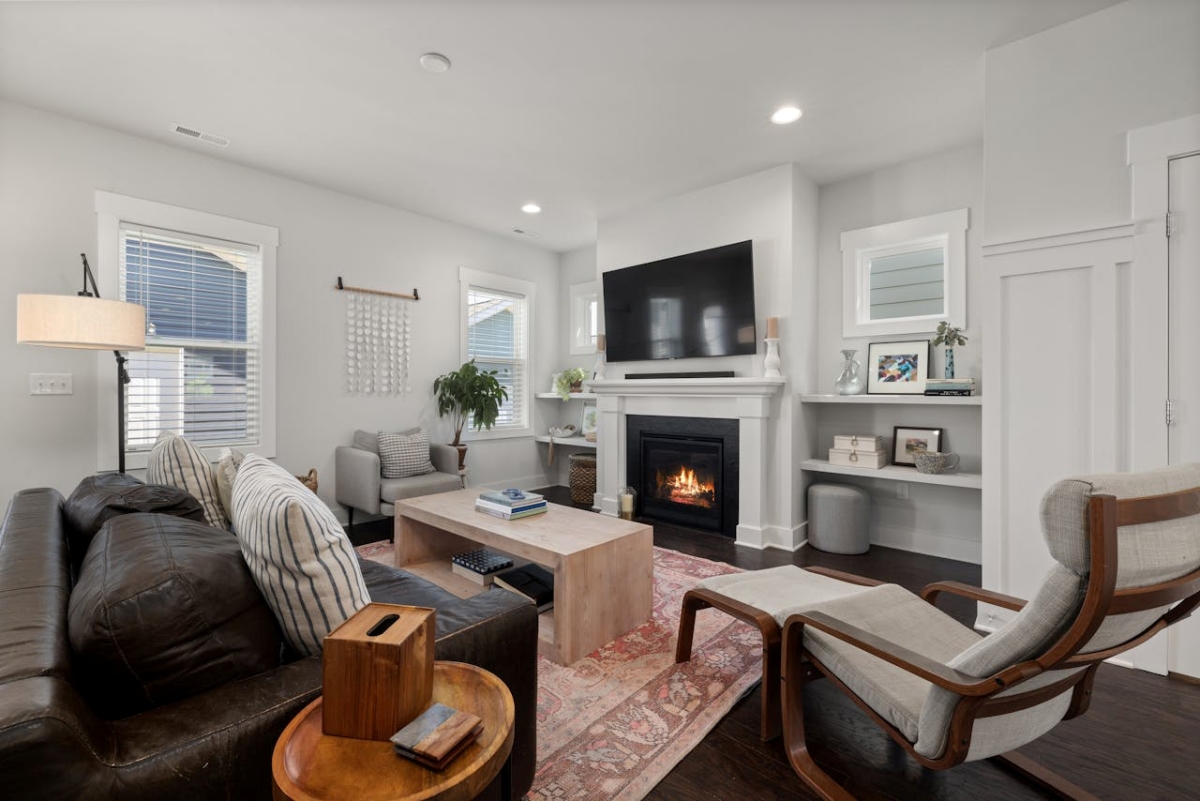
1. Visual Clutter: Clearing Surfaces for a Calm, Open Feel
Visual clutter is what happens when too many elements compete for attention in a space. It’s not just about “mess” or having a lot of items; it’s about how those items are arranged, how visible they are, and how easily your brain can make sense of what it sees. When your eyes constantly jump from object to object, color to color, and shape to shape without any clear order, the space feels visually noisy and overwhelming.
This kind of clutter can appear in any environment: crowded bookshelves, surfaces covered in small objects, busy wall art, tangled cords, or even a digital desktop full of overlapping windows and icons.
2. Bulky or Excess Furniture: Making Space to Breathe and Move
Bulky or excess furniture can quietly crowd a room, making it feel smaller, darker, and more stressful than it needs to be. Over time, many homes accumulate extra chairs, side tables, large cabinets, or oversized sofas that no longer match how the space is actually used. The result is often narrow walkways, blocked windows, and surfaces that become catch-all spots for clutter.
Removing or replacing bulky items with smaller, more streamlined alternatives can immediately open up floor space and sightlines. Replacing a large, rarely used dresser with a taller, narrower storage unit can free up valuable floor area in a bedroom. Even simply repositioning furniture to keep pathways clear and avoid blocking natural light can make a room feel more spacious and easier to move through.
3. Outdated or Damaged Decor: Refreshing Your Style with Less
When your home starts to feel tired, it’s easy to assume you need a full makeover. The key is learning to see outdated or damaged decor not as a failure, but as an opportunity to simplify, edit, and refresh.
Removing excess decor is one of the fastest ways to modernize a room. Pack away or donate duplicate items, overly themed accessories, and pieces that no longer mean anything to you. As surfaces empty, the items you truly love gain more presence and the room instantly feels calmer and more intentional.
Allowing some walls, shelves, and tabletops to remain partially empty is one of the most effective ways to make a room feel fresh and current. Your style doesn’t have to be expressed through quantity.
4. Worn-Out Textiles: Replacing Tired Fabrics with Cozy Comfort
Worn-out textiles have a way of quietly draining comfort and style from a home. Over time, fabrics lose their softness, color, and structure, leaving sofas sagging, curtains dull, and bedding less inviting. Recognizing when it’s time to replace tired fabrics is the first step toward restoring a sense of warmth and coziness to your space.
Signs of worn-out textiles are often easy to spot: pilling on blankets and upholstery, thinning or fraying edges on towels and sheets, stubborn stains that no longer lift, and colors that have noticeably faded. Even if these items are still technically usable, they may no longer feel pleasant against the skin or contribute positively to the look of a room.
6. Paper Piles and Mail Mountains: Tackling the Number-One Clutter Culprit
For many households, paper is the fastest-growing source of clutter. Bills, school notices, medical forms, coupons, catalogs, and junk mail arrive daily, often landing on the nearest flat surface.
7. Unused Kitchen Gadgets and Duplicates: Streamlining the Heart of the Home
The kitchen is often called the heart of the home, but it can quickly lose that warm, welcoming feeling when drawers are crammed with gadgets you rarely touch and cupboards overflow with duplicates.
A good starting point is to identify the tools you actually use in a typical week. Pull everything out of your drawers and cabinets and sort items into three groups: used frequently, used occasionally, and never used. Be honest about how often you reach for that avocado slicer or cupcake corer. If you haven’t used something in the last year and it doesn’t serve a very specific purpose you truly care about, it’s a strong candidate for donation or resale.
Specialty gadgets deserve a closer look. Single‑purpose items like pizzelle irons, fondue pots, or melon ballers may be worth keeping if they support a tradition or a hobby you genuinely enjoy. If they only come out once every few years and could be replaced by a more versatile tool you already own, consider whether they justify their footprint in your kitchen.
8. Old Toiletries and Products: Creating a Spa-Like Bathroom
Old toiletries and vintage-style products can instantly transform an ordinary bathroom into a soothing, spa-like retreat. Instead of thinking of them as clutter, consider how they can contribute to a calming, curated atmosphere when displayed thoughtfully and paired with a few simple upgrades.
Start by gathering older items that still look appealing: glass perfume bottles, ceramic soap dishes, brushed metal tins, apothecary-style jars, and classic shaving brushes. Even if the original products inside are no longer usable, the containers themselves can be cleaned and repurposed. Clear glass bottles can hold bath salts or colored water for a decorative touch, while small jars can store cotton pads, bath beads, or essential oil blends.
Consider the materials and colors in your bathroom as well. Spa environments tend to rely on natural textures and a soft, neutral palette, so try pairing your old toiletries with woven baskets, wooden accents, and plush white or beige towels.
Lighting and scent further enhance the atmosphere. Position reflective objects, such as glass bottles or polished metal containers, where they can catch warm, soft light from a lamp or candle. This diffused glow creates a sense of calm and highlights the character of your older pieces. At the same time, swap out any very old or expired scented products for fresh essential oils, bath soaks, or room sprays. You can decant new products into your favorite vintage containers, preserving the look while enjoying safe, pleasant fragrances.


