




The phrase ‘marketing consultant’ means different things in different markets. In Thailand’s online selling ecosystem, it means something very specific — and understanding what you’re actually buying (versus what you think you’re buying) will save you significant time and money.
This guide is for business owners and brand operators who are at the point where DIY marketing is no longer sufficient, but who aren’t sure whether they need a freelancer, an agency, or something in between. The answer depends on your stage, your goals, and the structure that actually fits how Thai digital marketing works in practice.
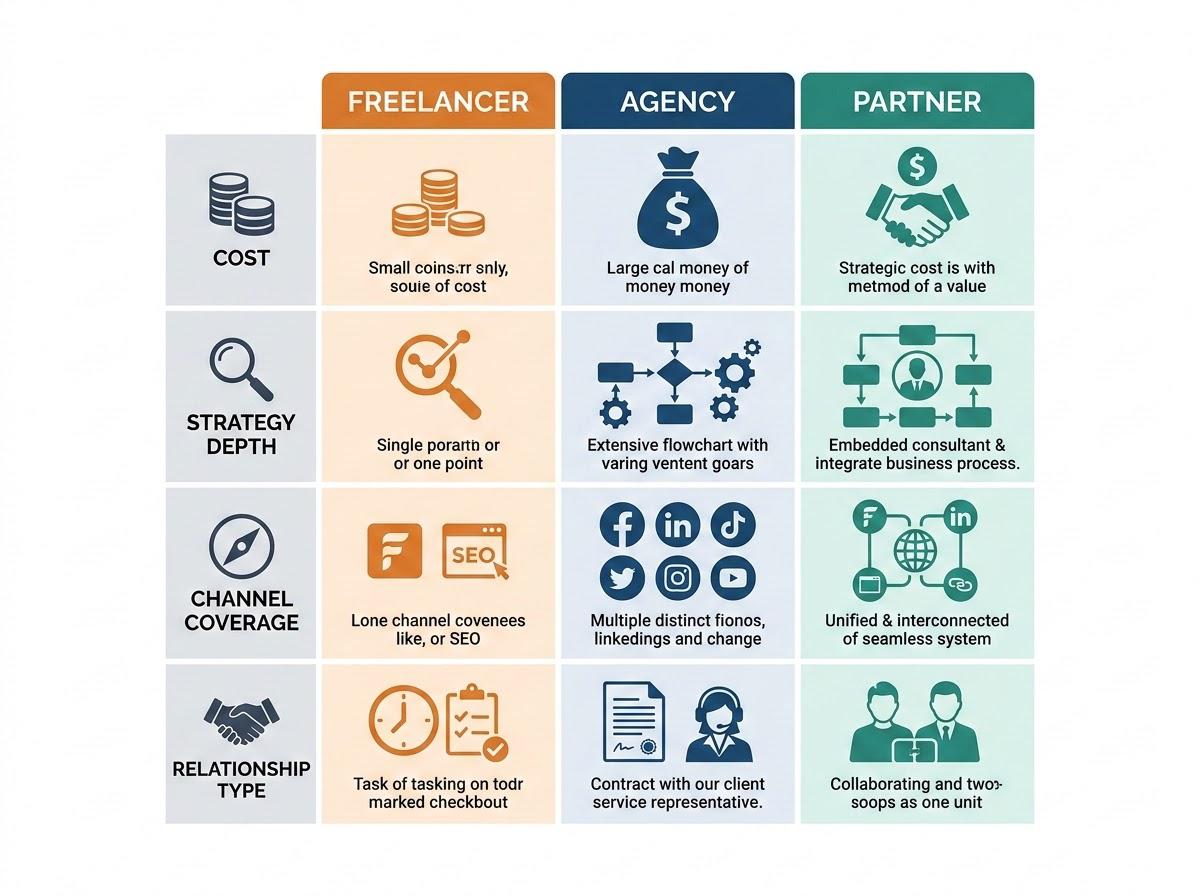
The Three Models Available in Thailand
Freelance Consultants
Individual specialists — typically strong in one channel (Facebook Ads, SEO, Line OA, TikTok content) and less experienced in how channels interact. Good for specific execution tasks at a lower budget. The risk: no strategic oversight means individual tactics can optimise against each other rather than toward a coherent goal.
Traditional Digital Agencies
Full-service agencies with dedicated account managers, creative teams, and reporting infrastructure. Strong on execution capacity and useful for brands that need high-volume content production. The challenge for smaller operators: minimum spends are high, account managers change frequently, and the relationship is often transactional rather than strategic.
Business Partner / Consultant Model
A newer model that’s gaining ground in Thailand’s online selling community — a senior consultant or small specialist firm that functions as an embedded strategic partner rather than a vendor. Typically structured as a retainer, covering strategy, oversight, and coordination across channels. Lower volume but higher judgment density. The right fit for brands where the owner’s time is the constraint, not just the budget.

What a Good Marketing Consultant in Thailand Should Actually Deliver
The output varies by stage, but across the board, a consultant worth their retainer should be able to do four things clearly:
- Diagnose why current performance is what it is — not just report the numbers but explain the mechanic behind them
- Prioritise ruthlessly — the Thai digital market has dozens of tactics that can move metrics; a consultant’s job is to identify the three that will move your specific metrics given your specific constraints
- Execute or supervise execution — strategy without implementation is a pitch deck, not a service
- Hold the long-term view while managing short-term pressure — especially important in e-commerce where platform algorithms reward consistency over time
Signs You Actually Need a Consultant (vs. Just Better Tools)
A few common patterns that signal it’s time to bring in external expertise:
- Your sales plateau has lasted more than 60 days and you’ve run out of hypotheses about why
- You’re spending on advertising but can’t clearly trace which campaigns are profitable
- You’re running three or more marketing channels and none of them are connected to each other strategically
- You know what needs to be done but don’t have the time to do it — and the business is suffering because of the gap
If any of these are true, the constraint is almost certainly strategic rather than tactical — and adding more tools or freelancers won’t solve it.
One Agency Thailand operates specifically at this junction — working with online sellers and growing brands as a strategic partner rather than a traditional agency, covering the coordination and strategy layer so business owners can reclaim their time and focus. The model is built around long-term retainer relationships rather than project-based engagements, which aligns incentives in a way that one-off campaigns typically don’t.
What to Ask Before You Hire
Regardless of which model you choose, these questions will surface whether a consultant is the right fit:
- Can you show me a client whose situation was similar to mine at the start, and explain specifically what changed?
- What does the first 30 days look like — what will you be doing, and what will I be doing?
- How do you measure whether this is working? What does success look like at 3 months, 6 months?
- If results don’t come, what’s the exit structure?
A consultant who answers these questions confidently and specifically is worth speaking to further. One who defaults to case studies and testimonials without engaging the specifics of your situation is probably a better fit for a different kind of client.


