

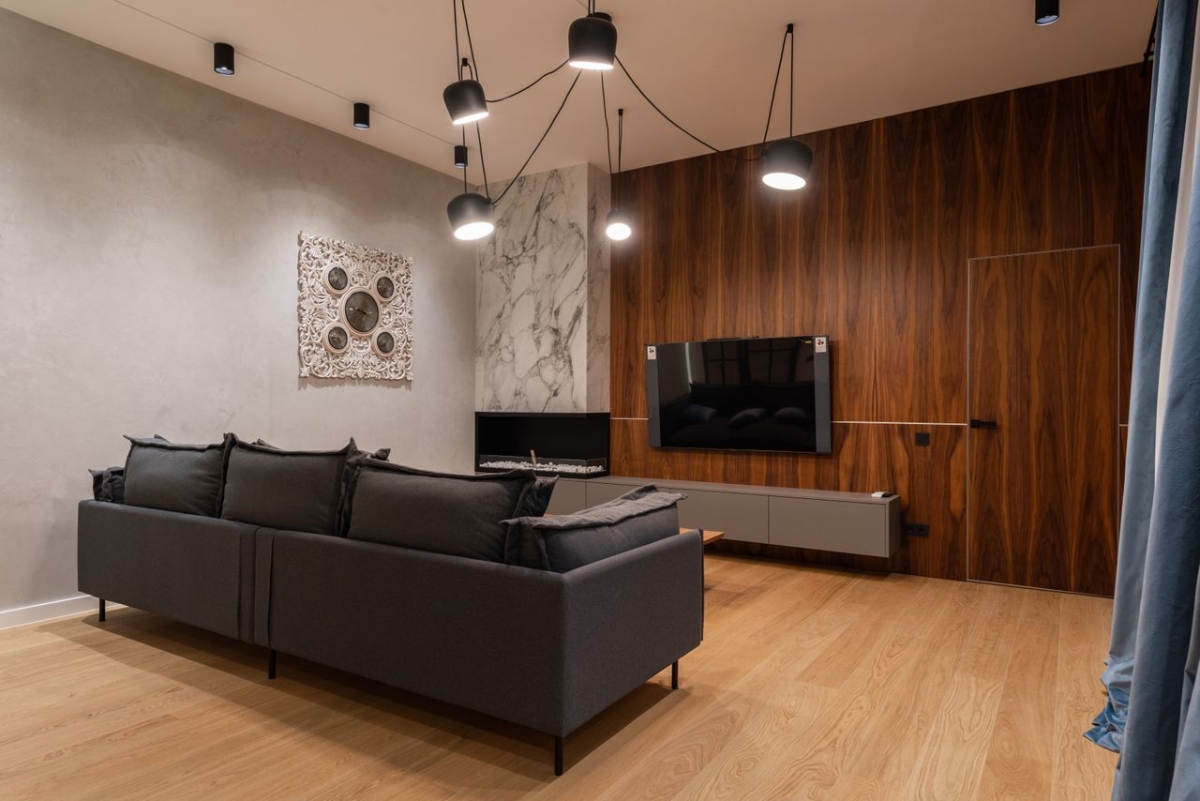
Wood paneling has long been a popular way to add texture, warmth, and character to interior spaces. Wood paneling refers to the use of wood boards or sheets applied to walls, ceilings, or other surfaces as both a decorative and functional finish. It can range from traditional, rustic looks to sleek, contemporary designs, depending on the type of wood, profile, and finish chosen.
Wood paneling can help with acoustics by softening echoes, especially in large or open rooms. It can also conceal minor wall imperfections and, in some installations, provide space for hidden wiring or insulation.
Dark wood paneling can give a room warmth and character, but it can also make the space feel smaller and darker if it isn’t balanced properly. You don’t need to paint over it to create a brighter, more inviting room. By adjusting lighting, furnishings, and décor, you can keep the richness of the wood while lightening the overall feel.
Assess the Space: Light, Layout, and Existing Features
Before you change anything in a room with dark wood paneling, start with a simple dark room assessment. Look closely at the natural light in your dark paneled room. Identify the direction your windows face: north-facing rooms usually feel cooler and dimmer, while south-facing windows tend to bring in more consistent, warm light. Check whether bulky drapes, blinds, or furniture block the windows. In many cases, simply swapping heavy curtains for light-filtering sheers, raising curtain rods higher, or rearranging furniture away from windows can give a small dark room a surprising boost of brightness—without touching the paneling at all.
High-gloss and very dark stains will absorb more light and show more contrast with pale furnishings, while medium or lighter stains can be easier to balance. A low light living room benefits greatly from layered artificial lighting. Instead of relying on a single overhead fixture, combine several light sources at different heights: floor lamps to lift light into dark corners, table lamps for a warm glow at eye level, and wall sconces or picture lights to brighten vertical surfaces.
Choose bulbs with a warm white color temperature to make the wood feel inviting rather than gloomy. When light hits the paneled walls from multiple angles, it softens shadows and makes the room feel larger and more welcoming.
Maximize Natural Light: Windows, Reflections, and Sightlines
The right window treatments for dark wood walls can dramatically change how much light the room receives and how that light behaves. Avoid heavy, opaque drapes that block sunlight and visually weigh down the walls. Instead, choose sheer curtains or light filtering shades that soften and diffuse daylight while still allowing it to pass through. Sheers in off-white, soft linen, or pale neutrals create a gentle glow that counterbalances the richness of the wood.
Hanging curtains high and wide is one of the simplest tricks to maximize daylight. Mount curtain rods closer to the ceiling and extend them beyond the window frame so panels can be pulled completely off the glass. This exposes the full window opening, letting in as much natural light as possible, and visually lifts the room, making dark walls feel taller rather than enclosing.
Incorporate mirrors opposite or adjacent to windows so they can reflect daylight deeper into the room. Glossy or semi-gloss finishes on small furniture pieces, metallic accents, glass tabletops, and light-colored décor with subtle sheen all help in bouncing natural light off the dark backdrop.
Light rugs, upholstery, and cushions prevent the room from feeling heavy and help the wood stand out as a design feature rather than a source of gloom. By combining the right window treatments, maximizing daylight, and using reflective surfaces strategically, you can transform a dark-paneled room into a warm, welcoming space that feels bright—no paint required.
Layered Lighting: The Right Fixtures to Counterbalance Dark Paneling
A brightened paneled room might have: a semi-flush ceiling fixture with high lumen, warm white bulbs for general ambient lighting; a pair of floor lamps in opposite corners to reduce shadows; table lamps by seating for reading; and wall sconces placed along the darkest stretch of paneling. With thoughtful layering and the right combination of ambient lighting, warm white bulbs, and well-placed floor lamps, table lamps, wall sconces, and ceiling lights, you can transform a dark wood–paneled room into a bright, welcoming space—without ever painting the walls.
Use Light-Colored Rugs and Flooring Tricks
A simple way to counterbalance dark walls is to introduce a light rug for dark wood walls. Opt for bright area rugs in soft neutrals—ivory, oatmeal, pale gray, or warm beige. These tones reflect more light, visually brighten the floor, and immediately lift the overall mood of the room. When the largest horizontal surface feels lighter, the dark paneling appears more intentional and less overpowering.
Patterned rugs are another effective tool. Look for designs where the background or dominant color is light, with darker accents that tie into the wood tones. This creates contrast with dark walls while still feeling cohesive.
Furniture Choices: Colors, Materials, and Scale
Light furniture in the dark room to offset the depth of the paneling. A white sofa against dark walls is one of the most effective combinations: a white sofa, cream sectional, or pale gray couch instantly lifts the mood and creates a strong, clean contrast. Opt for linen upholstery or other textured, light fabrics; the softness of linen not only brightens visually but also adds an inviting, relaxed feel that balances the formality of dark wood.
Side tables, coffee tables, and storage pieces in oak, ash, or whitewashed wood help bridge the gap between the white upholstery and the darker walls. These lighter tones prevent the room from feeling too heavy and help distribute brightness across the space.
A glass coffee table, glass nesting tables, or console with glass shelves allows light to pass through, reducing visual clutter and helping the room feel more open. Choose airy furniture styles with slim legs, open bases, and minimal ornamentation. Raised legs on sofas, chairs, and storage let more floor show, which tricks the eye into reading the room as larger and lighter.
Artwork and Wall Decor: Breaking Up Dark Wood Visually
Choose artwork with light or vibrant backgrounds—think soft whites, pastels, or airy landscapes—so they contrast with the dark wood and visually break up the expanse of brown. Large-scale pieces work particularly well because they cover more surface area and draw the eye away from the darker sections of the wall. If you prefer gallery walls, keep frames consistent in a lighter finish such as white, oak, or brushed brass to add brightness and cohesion.
Choose wall decor can also significantly lighten a dark room without altering the paneling itself. Mirrors are especially powerful in this context: a large mirror or a grouping of smaller mirrors will reflect existing light and break up the dark surface, instantly making the space feel more open. Consider frames in white, light wood, or metallic finishes to add even more luminosity. Other wall decor to lighten a dark room includes woven wall hangings, macramé, or fabric tapestries in soft, light colors. These add texture and warmth while softening the visual weight of the wood.
Adding Natural Elements: Plants and Organic Textures
Dark wood paneling can make a room feel rich and cozy, but it can also absorb a lot of light. If you don’t want to paint it, incorporating greenery is one of the most effective ways to visually brighten the space and soften the heaviness of the walls.
Many popular houseplants actually prefer indirect or dim light and will tolerate being away from windows. Snake plants, pothos, ZZ plants, philodendrons, and peace lilies are all good candidates. Dark wood makes a beautiful backdrop for bright green foliage, so let the leaves stand out against the walls. Tall plants in floor planters can break up large expanses of paneling and draw the eye upward, making the room feel taller and airier. Trailing plants on shelves or wall-mounted planters will spill down over the paneling, softening hard lines and adding movement.
