



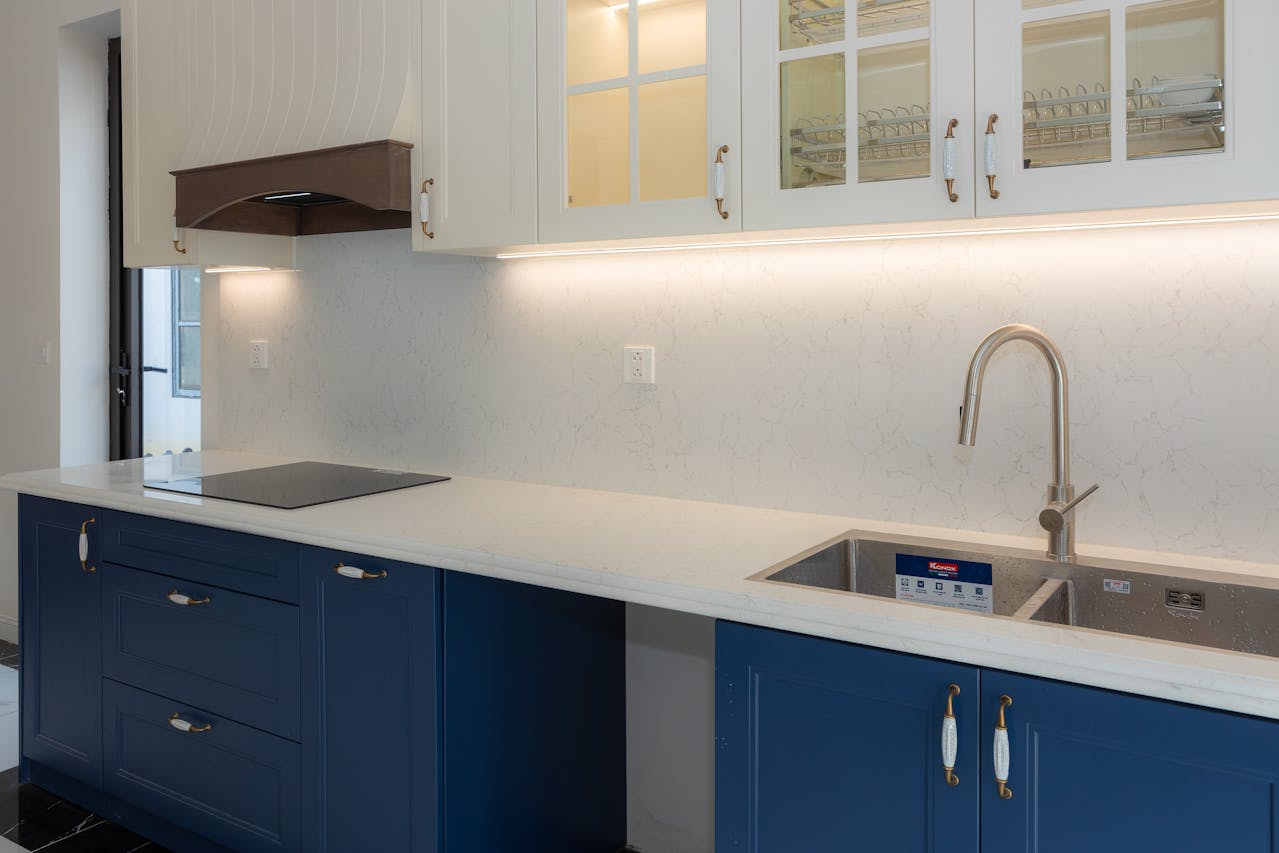
If you look closely at the architectural layout of modern apartments along Golf Course Road or the newer sectors of Gurgaon, you will notice a significant cultural shift. The kitchen is no longer a hidden, utilitarian service zone tucked away at the back of the house. It has officially broken through the walls, merging with the living and dining areas to become the social anchor of the home.
Because of this architectural evolution, selecting your kitchen cabinetry is no longer just a question of choosing a color you like. It has become a sophisticated design challenge. The cabinetry must match the refined aesthetic of your living room while remaining durable enough to withstand heavy, daily Indian cooking.
When designing a modular kitchen Gurgaon homes present a unique set of environmental conditions. From extreme seasonal temperature swings to high ambient dust levels, the materials and styles you choose need to be highly resilient.
1. The Handleless Slab Style: Ideal Minimalism
For homeowners opting for open-plan living, the Handleless Slab cabinet is the style most frequently recommended by the top interior designers in Gurgaon. These cabinets feature flat, uniform front surfaces completely free of traditional pulls or knobs. Instead, they utilize hidden continuous J-pull grooves or mechanical “push-to-open” systems.
Why this style works for Gurgaon apartments:
- Visual Continuity: Because the cabinet fronts are perfectly flush, they blend into the background, making a compact kitchen appear significantly larger.
- Maintenance Efficiency: With no protruding hardware or intricate crevices, these cabinets are remarkably easy to wipe clean—a massive advantage in a city with high dust levels.
- Material Recommendations: Designers typically execute this style using anti-fingerprint matte laminates, durable acrylics, or premium glass-faced panels.
2. The Modern Shaker Style: Balancing Heritage and Contemporary Lines
If an ultra-minimalist, clinical look feels a bit too cold for your taste, the Modern Shaker style offers a warmer, timeless alternative. A classic Shaker cabinet features a recessed center panel surrounded by a simple four-piece frame. The modern adaptation keeps this frame incredibly slim and completely free of traditional ornate moldings.
“A kitchen should feel like a natural extension of the home’s architecture. The moment your cabinetry feels like an afterthought, the harmony of the entire floor plan is disrupted.”
This style is perfect for creating a “Transitional” kitchen—one that effortlessly bridges the gap between classic warmth and clean, contemporary kitchen ideas. It pairs beautifully with soft, muted tones like olive greens, deep navies, or warm charcoals.
Did You Know?
- The Corner Wastage Fact: In a standard kitchen layout, up to 25% of potential storage volume is lost in dead corners. Modern kitchen storage solutions like LeMans corners or magic corners recover this space entirely.
- The Plywood Standard: Due to the steam and high moisture involved in Indian cooking, using Commercial MR (Moisture Resistant) plywood for kitchen carcases often leads to warping. True luxury kitchen design relies exclusively on Boiling Water Proof (BWP) marine ply.
3. Fluted and Textured Glass Cabinetry: Breaking Visual Monotony
A major mistake in large kitchen layouts is installing a solid wall of overhead cabinetry. This can make the cooking zone feel heavy and claustrophobic. To combat this, interior designers in Gurgaon are increasingly integrating fluted glass or reeded glass cabinets with slim matte-black aluminum frames.
Fluted glass acts as a design buffer. It allows light to pass through and bounce around the room, making the space feel airy. Furthermore, the ribbed texture softly obscures whatever is stored inside, meaning you don’t have to keep your everyday spice jars and crockery stacked with showroom-level perfection.
Engineering the Internal Storage: The Turnkey Advantage
A cabinet is only as good as the hardware running inside it. True luxury is experienced in how a heavy drawer glides open, or how a tall pantry unit smoothly pulls out to meet you.
When planning a kitchen remodel, partnering with comprehensive turnkey interior solutions providers ensures that the technical details are resolved before production begins. For instance, firms like Native Sutra—an architect-led practice managing major residential projects across Delhi NCR—approach kitchen design through the lens of strict ergonomics.
Instead of relying on generic modular sizes, their team customizes the carcass heights and counter levels to match the specific physical height of the homeowner, reducing back strain during meal prep. Furthermore, their strict “Zero Price Escalation” policy means that the advanced European soft-close hinges, heavy-duty tandem drawers, and quartz countertops are fully itemized in a transparent Bill of Quantities (BOQ) right at the start.
Conclusion: Crafting a Functional Masterpiece
Ultimately, a well-designed kitchen balances structural integrity with functional luxury. The perfect cabinetry style for your home depends on your floor plan, your daily cooking style, and how much time you wish to spend on daily maintenance. By stepping away from mass-produced, modular templates and focusing on personalized, architecturally engineered storage, you can build a kitchen that functions flawlessly and looks exceptional for decades.
If you are ready to elevate your cooking space with cabinetry that is built to last, the expert architects and engineers at Native Sutra can help. From custom ergonomic layouts to transparent, fixed-price pricing models, they handle your kitchen transformation end-to-end without any stressful surprises.
[Book a personalized design consultation with Native Sutra today to engineer your dream kitchen layout.]


