

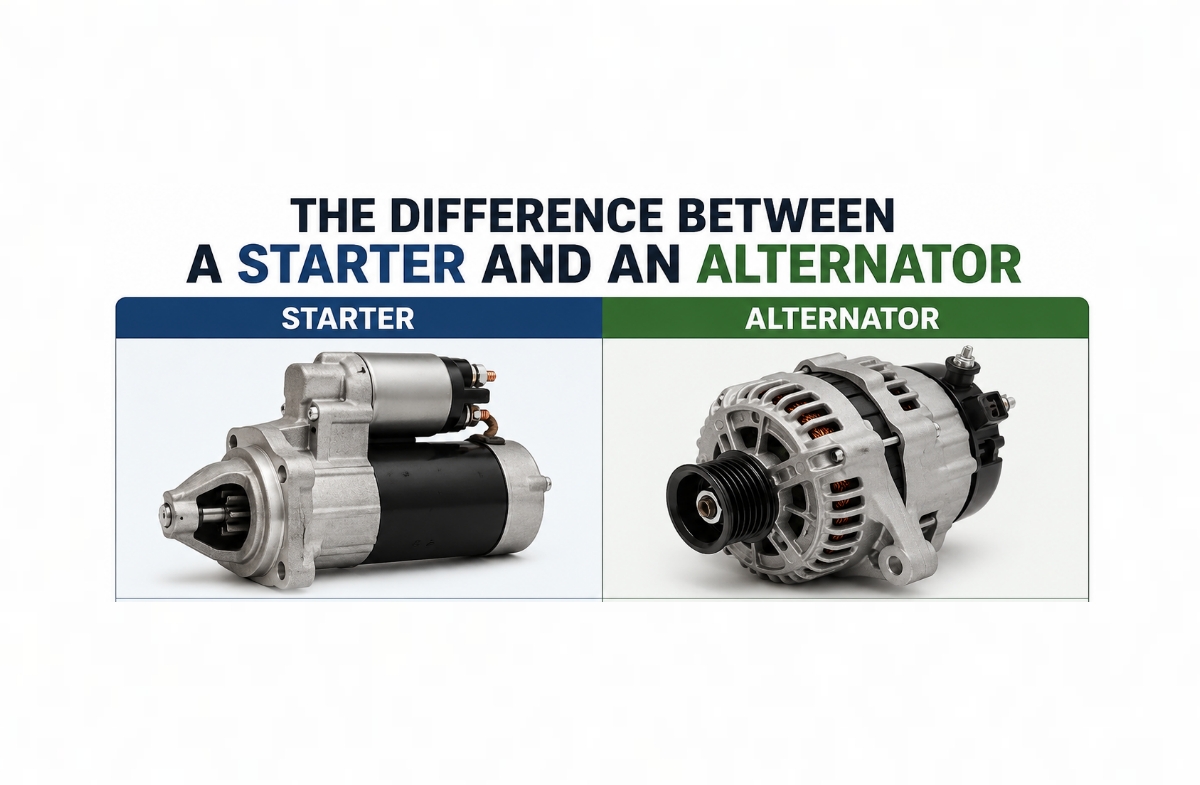
Car owners often hear about the starter and the alternator, but many people do not know exactly how they differ. Both are important electrical parts under the hood, yet they have completely different jobs. Understanding the difference between a starter and an alternator helps you maintain your vehicle better and avoid unnecessary repairs. In this article, we explain each one clearly and show how they compare.
What Is an Automotive Starter?
The starter is an electric motor that turns the engine to get it running. When you turn the key or press the start button, the starter draws power from the battery and spins the engine until it starts on its own.
A starter works only for a few seconds each time you start the car. It needs to produce strong turning force, called torque, to move the heavy engine parts. Once the engine fires up, the starter stops and rests until the next start.
Starters are usually located on the lower side of the engine. They have a small gear that connects to the engine’s flywheel. This gear moves out to crank the engine and then pulls back to stay safe.
What Is an Automotive Alternator?
The alternator is a generator that produces electricity while the engine is running. Its main job is to charge the battery and supply power to all the electrical systems in the car, such as lights, radio, air conditioning, and power windows.
Unlike the starter, the alternator works continuously when the engine is on. It converts mechanical energy from the engine belt into electrical energy. Most alternators keep the battery at a healthy level and maintain around 13.5 to 14.5 volts in the system.
You can find the alternator at the front of the engine, connected to a drive belt. It has a pulley that spins whenever the engine runs.
Key Differences in Function
The biggest difference between a starter and an alternator is their basic purpose. The starter starts the engine, while the alternator keeps the electrical system alive after the engine is running.
The starter uses a lot of power in short bursts. It can draw several hundred amps from the battery for just one or two seconds. The alternator, on the other hand, produces steady power, usually between 60 and 200 amps depending on the vehicle.
Another clear difference is timing. The starter is active only during engine start. The alternator begins working once the engine reaches a certain speed and continues until you turn off the car.
Differences in Structure
Starters and alternators look different because of their jobs. A starter has a strong electric motor with heavy windings, a solenoid switch, and a drive gear. The solenoid pushes the gear forward to connect with the engine.
An alternator has a rotor, stator, diodes, and a voltage regulator. It also includes cooling fans because it works for long periods and can get hot. Instead of a drive gear, it uses a pulley connected to the engine belt.
Starters are generally heavier and more compact for high torque. Alternators are often lighter and designed for continuous spinning at high speeds.
How They Work Together
Even though they have different roles, the starter and alternator depend on each other. The battery powers the starter to start the engine. Once the engine runs, the alternator takes over and recharges the battery.
If the alternator fails, the car runs on battery power only until it drains. Then the engine stops, and you will need the starter again once the battery is recharged or replaced. This shows how both parts are part of the same electrical system.
In modern cars with start-stop technology, the starter works more often, and the alternator must handle extra charging cycles.
Performance and Power Ratings
Starters are rated by torque and power in kilowatts. A typical car starter might be 1.2 to 2.0 kW. They focus on quick, strong rotation rather than long operation.
Alternators are rated by amperage output. A small car may use a 70-amp alternator, while trucks or luxury cars with many accessories need 150 amps or higher. They focus on steady voltage and current supply.
Common Problems and Symptoms
Starter problems usually show up during starting. You may hear clicking sounds, a grinding noise, or nothing at all when you turn the key. A bad starter often needs replacement.
Alternator issues appear while driving. Warning lights on the dashboard, dim lights, or a dead battery are common signs. A failing alternator can cause the engine to stall because of low power.
Both parts can wear out over time, but starters usually last 100,000 to 150,000 miles, while alternators often last longer with proper care.
Maintenance Tips
Taking care of both the starter and alternator is simple. Keep the battery clean and fully charged. Check the belt tension for the alternator regularly. Loose or worn belts can damage the alternator.
For the starter, make sure connections are tight and free of corrosion. Avoid leaving the key in the start position for too long, as this can overheat the starter.
Regular checks during oil changes or service visits help catch problems early.
Cost and Replacement
Replacing a starter or an alternator can vary in price depending on the car model. Starters are often cheaper than alternators in many vehicles. However, labor costs can be higher for starters because of their location.
Always use quality parts for both. Cheap options may fail quickly and cause more trouble.
If you run a repair shop or parts business, consider stocking reliable options. Many companies offer wholesale alternatorsat good prices and with a wide selection.
Why Knowing the Difference Matters
Understanding the difference between a starter and an alternator helps you explain issues to mechanics and make better decisions. You can avoid confusing the two when diagnosing problems. For example, a dead battery might be caused by a bad alternator, not a faulty starter.
This knowledge also saves time and money. Instead of guessing, you can focus on the right part.
For more information about quality car parts and professional support, visit https://unitechmotor.com/.
Summary of Main Differences
Here is a quick recap:
- Job: The starter turns the engine over. The alternator generates power.
- Working Time: The starter works for seconds. The alternator works continuously.
- Power Source: The starter draws power from the battery. The alternator charges the battery.
- Location: Both near the engine, but in different positions.
- Main Parts: The starter has a solenoid and a gear. An alternator has a rotor, a stator, and a regulator.
Both are essential for your car to run properly. The starter gets things going, and the alternator keeps everything powered.
By learning these differences, you become a more informed car owner or business professional. Regular maintenance on both parts ensures reliable performance and fewer breakdowns on the road.
