Asia is home to some of the most beautiful temples in the world, each reflecting centuries of faith, art, and cultural exchange. From gleaming hilltop shrines to intricate cave complexes, these sacred places are as visually stunning as they are spiritually significant.
Angkor Wat
Asia is home to some of the most beautiful temples in the world, and among them, Angkor Wat in Cambodia stands as one of the most iconic. Originally built in the early 12th century by King Suryavarman II, Angkor Wat was dedicated to the Hindu god Vishnu before later becoming a significant Buddhist site. Its scale alone is breathtaking: it is considered the largest religious monument on Earth, surrounded by a vast moat and approached by a long stone causeway that heightens the sense of entering a sacred space.
The beauty of Angkor Wat lies in both its grand design and its intricate details. The central temple complex is crowned with five lotus-shaped towers, symbolizing the mythical Mount Meru, the center of the universe in Hindu and Buddhist cosmology. As you walk through its galleries, you encounter some of the finest bas-relief carvings in Asia, depicting epic scenes from the Ramayana and Mahabharata, celestial dancers known as apsaras, and detailed floral and geometric patterns. These carvings showcase the extraordinary craftsmanship of the Khmer civilization at its height.
Borobudur
Among the most beautiful temples in Asia, Borobudur in Central Java, Indonesia, stands out as both an architectural wonder and a spiritual masterpiece. Built in the 9th century during the Sailendra Dynasty, Borobudur is the world’s largest Buddhist monument and a UNESCO World Heritage Site.
Borobudur is constructed in the form of a stepped pyramid with nine stacked platforms: six square levels at the bottom and three circular terraces at the top. These lead up to a large central stupa that symbolizes the ultimate state of enlightenment. Along the walls of the lower levels, you’ll find thousands of intricate bas-relief panels carved into volcanic stone. These panels depict scenes from the life of the Buddha, Jataka tales, and teachings from Buddhist scriptures, effectively turning the temple into a stone library of spiritual stories and moral lessons.
Wat Rong Khun
Asia is home to countless breathtaking temples, each reflecting the region’s rich spiritual and artistic traditions. Among these, Wat Rong Khun in Chiang Rai, Thailand, stands out as one of the most visually striking and unique. Often called the White Temple, Wat Rong Khun is a contemporary Buddhist temple designed by Thai artist Chalermchai Kositpipat, who began its construction in the late 20th century as an ongoing work of art and devotion.
Unlike traditional temples that use gold and deep colors, Wat Rong Khun is almost entirely white, symbolizing purity, with sparkling mirror mosaics embedded in the structure to represent enlightenment. As sunlight hits the temple, the building shimmers, creating a surreal, almost otherworldly effect. Visitors approach the main hall by crossing a bridge over a sea of sculpted hands reaching upward, a powerful visual metaphor for human desire and suffering that must be overcome to attain spiritual peace.
Shwedagon Pagoda
Shwedagon Pagoda, often called the “Crown of Burma,” is one of the most iconic and revered religious monuments in Asia. Rising nearly 100 meters above Yangon, Myanmar’s largest city, this golden stupa dominates the skyline and serves as both a sacred pilgrimage site and a powerful cultural symbol. According to tradition, the origins of the Shwedagon Pagoda date back more than 2,500 years, which would make it one of the oldest Buddhist stupas in the world. Over centuries, Burmese kings, queens, and devotees have added layers of gold, jewels, and intricate craftsmanship, transforming it into the radiant structure visitors see today.
The main stupa of Shwedagon Pagoda is covered with thousands of gold plates, and the upper sections are adorned with countless diamonds and precious stones, including a massive diamond set at the very top. At sunrise and sunset, the entire monument glows, shifting in color with the changing light and creating a breathtaking spectacle visible from many points in the city. Around the central stupa, numerous smaller shrines, pavilions, and statues of the Buddha offer visitors a chance for quiet reflection, prayer, and meditation. The complex is constantly alive with activity, from monks chanting and locals making offerings to families strolling through the grounds.
Harmandir Sahib / The Golden Temple
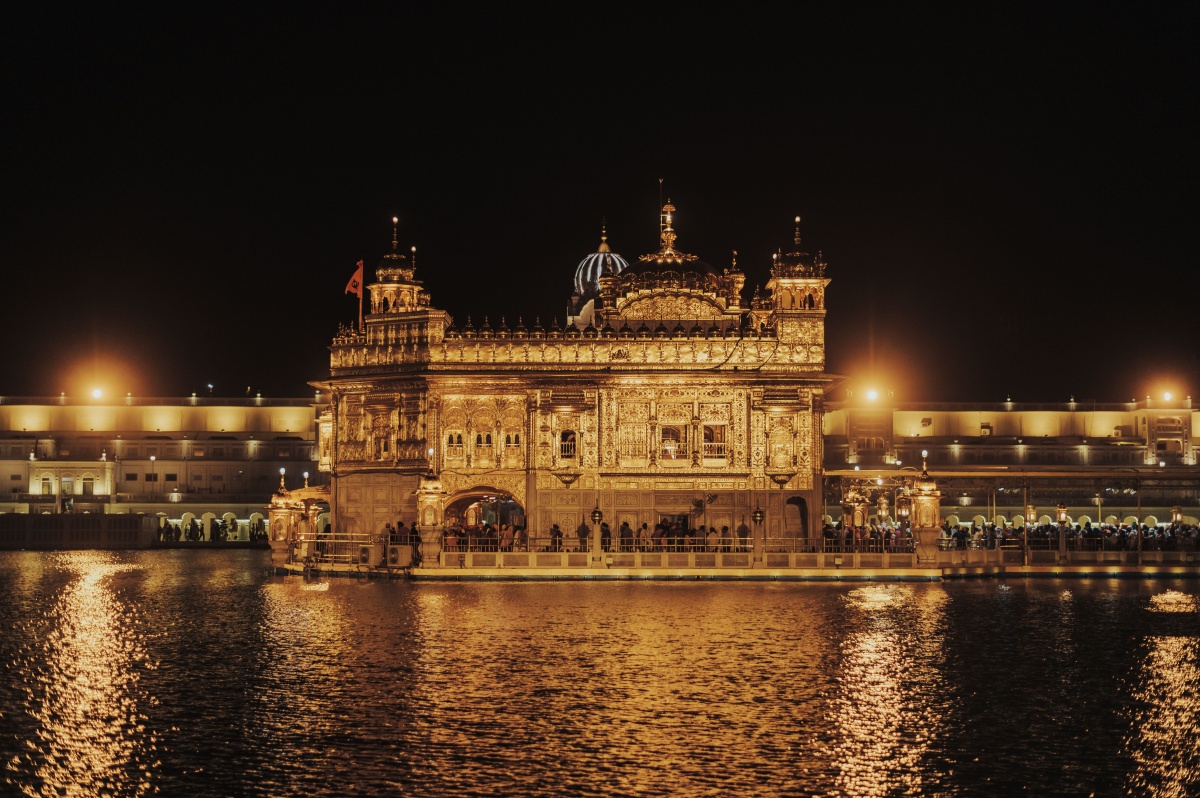
Harmandir Sahib, widely known as The Golden Temple, is one of the most beautiful and spiritually significant temples in Asia. Located in Amritsar, in the Indian state of Punjab, it is the holiest Gurdwara of Sikhism and a powerful symbol of equality, humility, and devotion. The temple complex is built around a large sacred pool, the Amrit Sarovar, whose still waters reflect the shimmering gold-plated structure at its center, creating a striking and serene panorama day and night.
Harmandir Sahib stands out for its blend of Hindu and Islamic design elements, crowned by a gilded dome that is said to represent an inverted lotus, symbolizing a spiritual detachment from worldly concerns. The temple itself is accessible via a causeway that cuts through the surrounding pool, inviting visitors of all backgrounds to walk towards the sanctum in a slow, reflective procession. Inside, continuous recitation of the Guru Granth Sahib, the holy scripture of Sikhism, fills the air with hymns and devotional music, adding to the contemplative atmosphere.
Kinkaku-ji
Kinkaku-ji, also known as the Golden Pavilion, is one of the most beautiful temples in Asia and a symbol of Kyoto’s cultural heritage. Originally built in the 14th century as a retirement villa for shogun Ashikaga Yoshimitsu, it was later converted into a Zen Buddhist temple. What makes Kinkaku-ji especially striking is its top two floors, which are covered entirely in gold leaf. On clear days, the temple shimmers in the sunlight and reflects almost perfectly in the surrounding pond, creating a scene that feels both otherworldly and serene.
The temple is set within a carefully designed strolling garden that guides visitors along winding paths, offering different framed views of the Golden Pavilion and the water. Each angle reveals a new composition of trees, rocks, and reflections, showcasing the traditional Japanese aesthetic principle of harmony between architecture and nature. Despite the crowds it often attracts, Kinkaku-ji maintains an atmosphere of calm, inviting quiet reflection as you move through the grounds.
Sensō-ji
Sensō-ji, located in the historic Asakusa district, is Tokyo’s oldest Buddhist temple, originally completed in the 7th century. Dedicated to Kannon, the bodhisattva of compassion, it blends vivid architectural detail with a vibrant, living spiritual atmosphere. Visitors enter through the iconic Kaminarimon, or Thunder Gate, distinguished by its massive red lantern and imposing guardian statues. Beyond this gate lies Nakamise-dori, a bustling shopping street dating back centuries, lined with stalls selling traditional sweets, crafts, and souvenirs. This approach to the temple highlights how Sensō-ji serves both as a sacred space and a cultural hub.
At the heart of the complex, the main hall and five-story pagoda showcase classic Buddhist temple architecture in striking vermilion and gold. Though the original structures were damaged and rebuilt multiple times, their current forms faithfully preserve traditional design while incorporating modern craftsmanship. Incense burners in the courtyard invite visitors to waft smoke over themselves for good fortune, and the constant flow of worshippers, tourists, and local residents creates an environment that is both reverent and welcoming.
Tongdosa
Tongdosa in South Korea holds a special place for its serene beauty and deep spiritual significance. Located near Yangsan in Gyeongsangnam-do Province, Tongdosa is one of Korea’s “Three Jewel Temples” and is especially revered because it houses relics of the historical Buddha himself, rather than large outdoor Buddha statues.
Tongdosa differs from many other famous Asian temples known for towering pagodas or extravagant ornamentation. Its beauty lies in harmony with nature: wooden halls arranged along gentle slopes, stone lanterns lining quiet paths, and forested hills that change character with each season—cherry blossoms in spring, lush greens in summer, fiery foliage in autumn, and snow-tipped roofs in winter. The main courtyards guide you gradually upward, creating a sense of pilgrimage even within the temple complex.
Tongdosa’s main shrine, known as Daeungjeon, does not contain a Buddha statue at its center. Instead, worshippers face an empty altar that symbolizes the Buddha’s presence through the relics enshrined just beyond. Around the complex, visitors can also see ancient stupas, hermitages, and pavilions, each with its own history tied to Korean Seon (Zen) Buddhism. The quiet streams, old pine trees, and misty mornings add to the temple’s reputation as one of the most beautiful temples in Asia—not only visually, but in terms of atmosphere and spiritual depth.
Sree Padmanabhaswamy Temple
Among the many remarkable temples in Asia, the Sree Padmanabhaswamy Temple in Thiruvananthapuram, Kerala, stands out as one of the most beautiful and historically significant. Dedicated to Lord Vishnu in his Anantha Shayana, or reclining, posture, this temple is renowned for its intricate Dravidian architectural style, towering gopuram, and elaborate stone and wood carvings that depict scenes from Hindu mythology. The temple’s interior is adorned with detailed murals and ornamentation, creating an atmosphere that is both visually striking and spiritually immersive.
Sri Sivan Temple
Asia is home to some of the world’s most breathtaking temples, each reflecting the region’s rich spiritual traditions, architectural styles, and cultural histories. Among these, the Sri Sivan Temple in Singapore stands out as a particularly beautiful example of South Indian Hindu temple architecture outside of India.
Dedicated to Lord Shiva, Sri Sivan Temple combines intricate Dravidian design with the clean, orderly surroundings that Singapore is known for. Its towering gopuram (gateway tower) is adorned with brightly colored sculptures of deities, mythological figures, and sacred symbols, all meticulously crafted and maintained. As you walk closer, the detailed carvings and vivid hues create a powerful visual impact, especially at sunrise and sunset when the light softens and deepens the colors.