

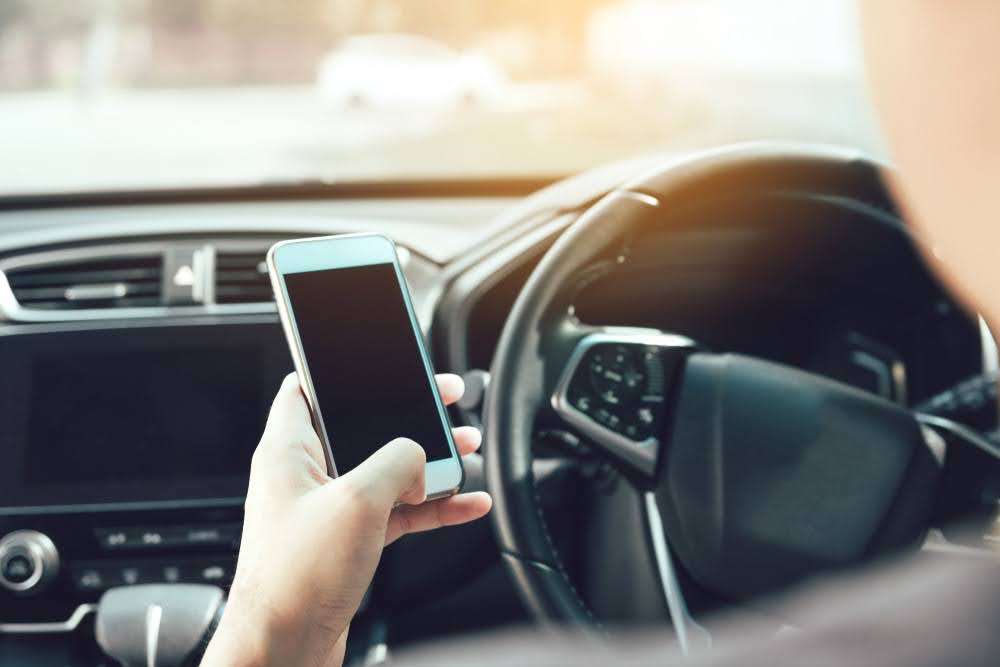
A crash scene rarely tells the whole story.
Twisted metal, broken glass, and damaged vehicles show what happened after impact, but they do not always explain why it happened. In many traffic collisions, one of the biggest questions is whether a driver was paying attention to the road in the moments before the crash. That question often becomes central to the work of a distracted driving accident lawyer, especially when there is little direct evidence showing what the driver was doing before the collision. A driver may deny being distracted, and witnesses may only see part of the event.
Because of this, proving fault often requires much more than a simple statement.
The Challenge of Proving What a Driver Was Doing Seconds Before a Crash
Distracted driving is one of the most commonly discussed causes of traffic accidents. Yet proving distraction is often more difficult than many people expect.
A driver may not admit to checking a phone, reading a message, eating, or focusing on something other than the road. Unlike speeding, distraction does not always leave an obvious physical sign behind.
This is why attorneys and investigators spend time examining evidence that helps reconstruct what happened before the collision. In many cases, a driving accident lawyer begins by looking at the events leading up to the crash rather than focusing only on the damage that followed.
The Crash Timeline Usually Becomes the Starting Point
One of the first goals in an investigation is creating a timeline of events.
Investigators often review traffic conditions, vehicle movements, and driver actions during the final moments before impact. A delayed reaction can sometimes reveal important information.
For example, if traffic slowed gradually but one vehicle failed to brake until the last second, investigators may ask whether the driver was paying attention. Even small gaps in reaction time can help explain why a collision occurred.
The timeline helps connect individual pieces of evidence into a clearer sequence of events.
Cell Phone Activity Can Tell Part of the Story
Mobile devices frequently become part of distracted driving investigations.
Calls, Texts, and App Usage
Phone records may show whether calls, messages, or app activity occurred around the time of the collision. Investigators are often interested in timing rather than content.
If activity appears seconds before impact, it may raise questions about whether the driver was focused on the road.
The Limits of Phone Evidence
Phone records alone do not automatically prove fault.
A message may have been received without being read. A call may have occurred through a hands-free system. Because of this, attorneys usually look for additional evidence that supports the overall timeline.
Phone activity is often one piece of a much larger picture.
Witnesses Often Notice Distraction Before the Collision
People nearby sometimes observe details that the drivers themselves miss.
Another motorist may notice a driver looking down repeatedly. A passenger may remember that the driver was interacting with a device. Pedestrians may observe unusual behavior before the collision occurs.
Independent witnesses can be especially valuable because they have no direct involvement in the outcome of the claim. Their observations may help confirm or challenge other evidence collected during the investigation.
These accounts often become more meaningful when combined with physical evidence and electronic records.
Vehicle Data May Reveal a Driver’s Lack of Attention
Modern vehicles collect information that can sometimes help explain what happened before a crash.
Certain systems record braking activity, steering inputs, speed changes, and other vehicle responses. These records may reveal whether a driver reacted late to changing traffic conditions.
For example, a lack of braking before impact could suggest that the driver failed to notice a hazard in time. While vehicle data does not explain why a driver reacted late, it may help establish that a delayed response occurred.
Video Footage Has Changed Distracted Driving Investigations
Video evidence can provide a direct view of events that would otherwise rely on memory and opinion.
Dashcams and Traffic Cameras
Dashcams may capture driver behavior, traffic conditions, and vehicle movements before impact. Traffic cameras sometimes provide additional angles that help clarify what occurred.
Surveillance Footage From Nearby Businesses
Businesses near intersections or roadways may have cameras that record the collision. These recordings can help confirm timelines and vehicle positions.
Because cameras record events as they happen, video evidence often becomes one of the strongest forms of documentation available.
Small Details at the Scene Can Support a Larger Conclusion
Physical evidence often helps investigators understand how a crash unfolded.
A lack of skid marks may suggest that a driver did not brake before impact. Damage patterns can reveal vehicle positions and movement. Debris locations may help identify the point of collision.
Investigators frequently compare these details with witness statements and electronic records. Reviewing distracted driving evidence from multiple sources allows them to evaluate whether distraction likely contributed to the crash.
Why Fault Is Built Through Multiple Pieces of Evidence
Very few distracted driving cases are proven through a single document or witness statement.
Instead, attorneys often connect phone records, witness observations, vehicle data, video footage, and physical evidence. Each source may provide only part of the story, but together they can create a more complete picture.
This process helps investigators move beyond assumptions and focus on facts that can be verified.
Takeaway
Many distracted driving cases involve more than mobile devices. Drivers can become distracted while eating, adjusting vehicle controls, speaking with passengers, or focusing on something outside the vehicle.
Because distraction takes many forms, investigations are designed to examine overall driver attention rather than just phone use. A distracted driving accident lawyer often evaluates every available source of information to understand what happened before impact. By combining evidence from multiple directions, attorneys can better establish fault and create a clearer understanding of how a collision occurred.
