

Photo editing used to begin with a toolbox. Anyone who wanted to replace a background, remove an unwanted object, adjust clothing, or change a visual style first had to understand which tool could perform the task. That usually meant working through selections, masks, layers, brushes, healing tools, and repeated adjustments before reaching the desired result.
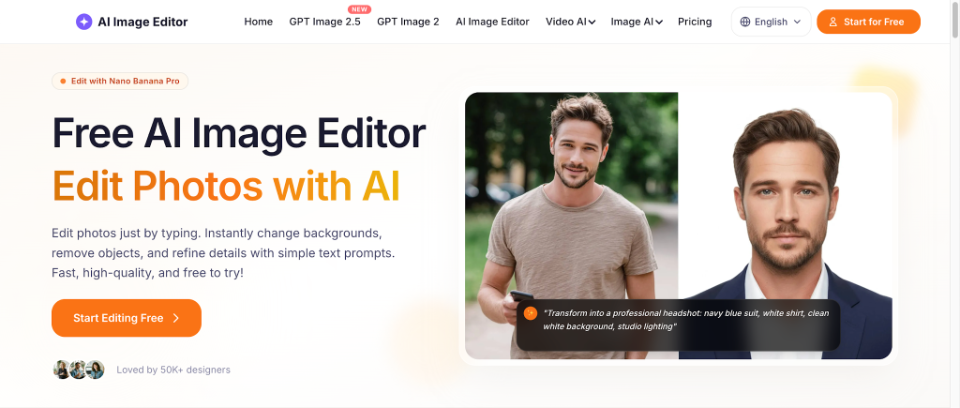
That workflow is now starting to change. Modern AI Image Editor tools allow users to upload an image and describe the change they want in everyday language. Instead of searching through menus, a person can write instructions such as “remove the chair behind the subject,” “change the jacket to black,” or “replace the background with a clean studio wall.” The editing process begins with the desired result rather than the mechanics behind it.
This change matters because it alters how people approach image editing. The user no longer needs to think like an editor before making an edit. In many cases, they only need to explain what should change, what should stay the same, and what the final image should look like.
From Tool Selection to Intent-Based Editing
Traditional editing workflows are action-driven. A person chooses a tool, performs a specific operation, checks the result, and repeats the process until the image looks right. Even a relatively small adjustment can require several separate steps, especially when the subject has complex edges or the surrounding background needs to be reconstructed.
Text-based editing starts from intent instead. The user describes the outcome and lets the system determine how to carry out the underlying operation. Someone removing an object does not necessarily need to understand inpainting, masking, or texture reconstruction. They can simply describe the object that should disappear and explain what must remain untouched.
This makes the workflow easier to understand for people who do not edit images professionally. Rather than asking, “Which tool should I use for this?” they can focus on a more natural question: “How clearly can I describe the change I want?”
Why Natural Language Fits Everyday Editing
Many common editing tasks are much easier to describe than to execute manually. A person may know exactly that they want to remove a stranger from a background, change a red sweater to beige, clean up a cluttered table, or turn a portrait into an illustration. The difficult part has traditionally been translating that visual idea into a sequence of technical editing actions.
Natural-language editing shortens that gap. A written request can contain several details at once, including what should change, where the change should happen, and which parts of the image must remain intact.
Users Can Focus on the Result
A content creator may care about making a background cleaner but have little interest in learning edge selections. A small business owner may want a product photo to look more polished without learning advanced retouching. A casual user may simply want to remove something distracting from a family photo.
Text instructions allow all three users to begin from the visual outcome. The technical process happens behind the scenes, while the user stays focused on whether the image matches the intended result.
Editing Becomes More Iterative
Natural-language editing also makes experimentation easier. A user might first request a neutral studio background, decide that the result feels too plain, and then ask for warmer tones or a softer surface. Instead of starting over, the person can continue refining the image through follow-up instructions.
This creates a more conversational workflow. Editing becomes a sequence of decisions rather than one long technical procedure. The user can test ideas, compare alternatives, and adjust the direction without rebuilding the image from scratch each time.
Complex Requests Become Easier to Express
Some image changes involve several connected instructions. A user might want to remove a person on one side of the frame, keep the main subject untouched, and replace part of the environment at the same time.
That kind of request can be described naturally in a sentence: “Remove the person on the left, keep the woman in the center unchanged, and replace the street background with a modern café interior.” Expressing the same intention through a traditional interface could involve several tools and multiple rounds of refinement.
Prompt Quality Is Becoming an Editing Skill
Text-based editing lowers the technical barrier, but it introduces a different skill: writing clear instructions. The quality of the prompt can have a noticeable effect on the quality of the result.
A vague request such as “make this look better” leaves too much room for interpretation. The system has to guess what “better” means. A more useful instruction might say, “Remove the plastic cup from the table, keep the person and lighting unchanged, and fill the empty area naturally.”
Strong editing prompts usually answer four questions: what should change, what should replace it, what must stay the same, and what visual constraints matter. Those details are especially important when editing faces, clothing, branded products, logos, or carefully composed scenes.
Clear prompts do not need to be long. In many cases, a short and precise request works better than a paragraph filled with unnecessary description. The goal is to reduce ambiguity rather than to write as much as possible.
Where Text-Based Editing Is Most Useful
The most practical uses of AI editing are not always dramatic transformations. In many situations, the value comes from making a small correction quickly and keeping the rest of the image intact.
Cleaning Up Backgrounds
Backgrounds often contain distractions that were not obvious when the photo was taken. A chair may sit awkwardly behind a person, a box may appear in the corner of a product shot, or a passerby may enter the frame.
Instead of rebuilding the entire scene, users can describe the specific distraction and ask for it to be removed. This type of cleanup is useful because the main subject can remain unchanged while only the distracting element is corrected.
Changing Specific Objects
Text instructions can also target a particular object without changing the rest of the composition. A user might replace sunglasses, alter a shirt, remove a sign, add a plant, or change a small decorative element.
AI Photo Editor workflows such as the one used by Aggiii AI are built around this type of interaction. Users upload an image, describe the desired edit, and generate a revised version without manually selecting every object or region.

Exploring Different Visual Styles
The same source image can also be adapted into several creative directions. A portrait may become a watercolor illustration, a casual photo may take on a vintage film look, or a clean product shot may be restyled for a campaign.
This makes style exploration more accessible because users can test visual ideas before committing to one direction. The original image becomes a flexible starting point instead of a fixed final asset.
Text Does Not Eliminate the Need for Judgment
AI can automate parts of the editing process, but it does not remove the need for human review. A generated edit may follow the main instruction while introducing small inconsistencies elsewhere in the image.
Hands, faces, text, logos, clothing patterns, reflections, and object edges deserve particular attention. A user should compare the edited result with the source image and check whether important details remain accurate.
A reliable workflow therefore remains iterative: upload the image, describe the desired change, inspect the result, and refine the instruction if necessary. The human role shifts away from manually producing every adjustment and toward directing, evaluating, and correcting the output.
A Different Relationship With Image Editing
The most important development is not that AI can remove objects or replace backgrounds. Editing tools have been able to perform those tasks for years. The more significant change is how users communicate with the editing system.
Traditional workflows require people to learn the language of editing tools. Text-based workflows move in the opposite direction by allowing the system to respond to the language people already use. That makes image editing more approachable for marketers, online sellers, creators, students, and everyday users who may have clear visual ideas but no reason to master professional editing software.
As these systems improve, image editing is likely to become even more conversational. Users will expect to make one change, review the result, and continue with simple follow-ups such as “keep everything else the same,” “make the background warmer,” or “remove only the object on the right.”
That shift changes the role of the user from operator to director. The value of text-based editing is therefore not simply that it saves a few steps. It gives more people a practical way to turn a visual idea into an edited image without first learning a complex editing workflow. For everyday image work, that may be the change that matters most.
